
Behind the Closed Shutters: The Secret Graffiti Stories of Mahane Yehuda Market
19 June 2026
On Saturday morning Mahane Yehuda Market falls silent. And that is exactly the moment to come.
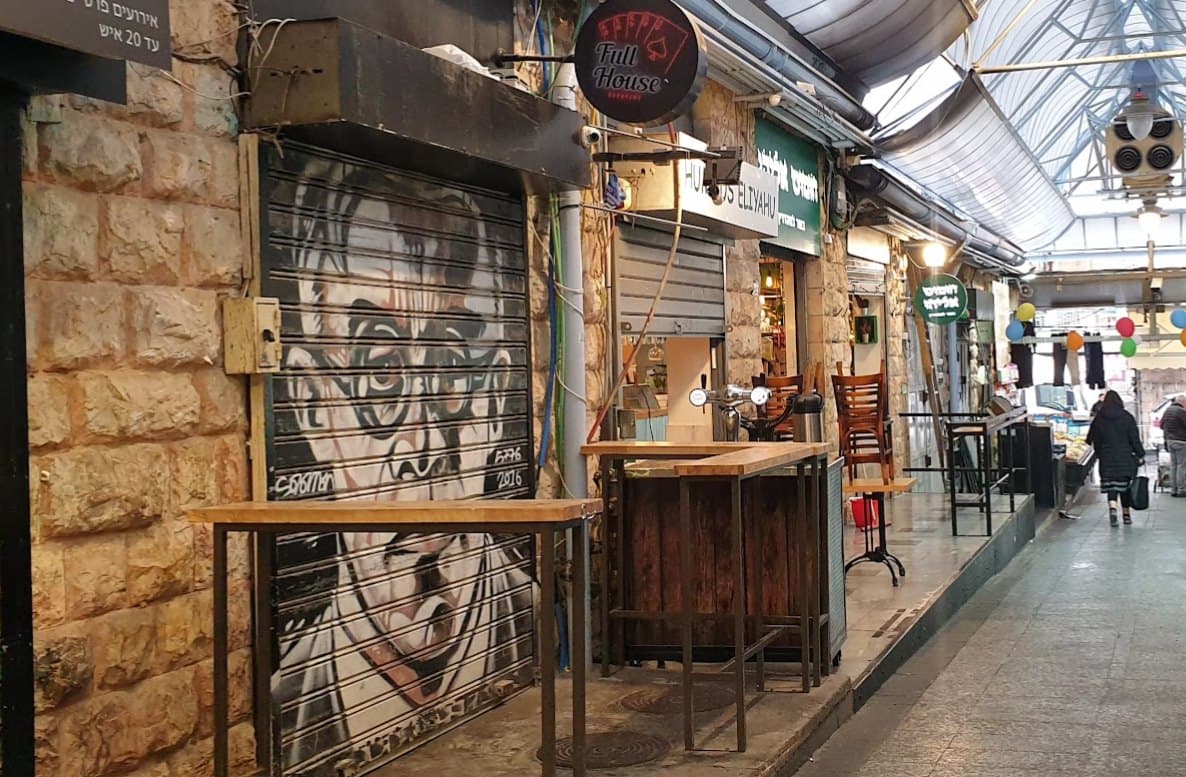
When the stalls are shut and the streets empty out, the shutters that spend the whole week hidden behind piles of merchandise are revealed. Hundreds of faces look back at you from the metal.
This may well be the largest street gallery in Israel, and it is open only when everything else is closed.
Part 1: The artist who painted the market at night
One artist is behind the project: Solomon Souza.
Souza started painting on the shutters after closing time, when the market had emptied out and the rusted metal became a free canvas. For a long stretch he came back night after night, shutter after shutter.
Who is looking out from the metal
The figures are not random decoration. They are portraits of people who shaped culture - leaders, rabbis, artists and historical figures.
Some are very familiar faces, some take a moment's thought. Every shutter is really a question: who did they choose to commemorate here, and why that person in particular.
Part 2: The art route - where the best paintings hide
The trick is not to stand in one spot, but to wander between the alleys.
The paintings are spread across the whole market, but the highest concentration is in the narrow side alleys. There, away from the main street, the shutters are close to you and you can really look.
The alleys to start with
- HaAgas Street: a narrow lane where the paintings almost touch one another. Easy to miss when the market is busy, easy to find when it is closed.
- HaShaked Street: another corner worth taking slowly. Let your eye move over the shutters one by one instead of racing ahead.
How to look at them
Take a step back from every shutter. The portraits are large, and they look different from two metres away than they do up close.
And pay attention to the background: often the painting leans on an old stone wall or on the sign of a long-established shop, and that is part of the picture.
Part 3: The quiet tour - when you really see the walls
The magic of this walk is the pace. No pushing, no noise - just you and the walls.
There are two ways to do it, and it is worth understanding the difference.
Option one: Shabbat
On Shabbat the market is completely closed. It shuts about an hour before Shabbat comes in and reopens only after Shabbat goes out on Saturday night - and even then almost no business opens, so it is better to treat it as closed.
This is the purest time for the art: every shutter exposed and not a soul in the street. Just remember that nothing at all is open there - no coffee, no toilets, no water. Come prepared.
Option two: a quiet weekday evening
If you would rather have your art with a cup of coffee in hand, a quiet weekday evening is the right choice. The market has already calmed down, but some of the businesses are still awake.
Roasters Coffee can be a good stop before you carry on - it is worth checking the opening hours in advance. On the way you will also pass long-established places like HaMotzi Restaurant, which have themselves become part of the artistic landscape.
So what next?
The graffiti of Mahane Yehuda is one of those things that is easy to miss and hard to forget once you have seen it properly.
The paintings change over time - some are refreshed, some fade, and sometimes new ones appear. To know what is new in the neighborhood and which cultural events are coming up, follow the guides and updates at livejlm.com.
And if you want to see the shutters in motion, face after face - take a virtual tour. Watch our first-person walking tours on the livejlm YouTube channel, and plan your route before you even arrive.
A letter about what's on in the city, usually once a week. It may also carry offers, and some links may be partner links. You can unsubscribe from any letter.